
Università Cattolica del Sacro Cuore Admissions Guide
Everything you need to apply to Università Cattolica del Sacro Cuore: entrance requirements, application deadlines, tuition and cost of living, and the Cattolica Medicine Test.
At a glance
Cattolica in brief
- Entrance exam
- Cattolica Medicine Test
- Language of instruction
- English
- Interview required
- No
- Tuition
- €18,150 / year
- Cost of living
- €1,000–1,500 / month
- Application deadline
- 17 February 2027 for 2027/2028 (applications open since the call of 14 October 2026; entrance exam 17 March 2027)
- Subjects tested
- Logical Reasoning, Biology, Chemistry, Physics, Mathematics, General Culture, Ethics and Religious Culture
Source: Università Cattolica del Sacro Cuore Admissions · Verified 28 Sep 2026
Admission test
Cattolica Medicine Test
Università Cattolica del Sacro Cuore requires the Cattolica Medicine Test for admission. Here are the essential figures.
- Total Questions
- 65
- Test Duration
- 65 min
- Main Sections
- 7
- Maximum Score
- 65
Not sure you'd clear the cutoff?
Take the free Cattolica diagnostic: real questions from its own question bank, scored against its cutoff. No account needed.
What the exam tests
- Logical Reasoning
- Biology
- Chemistry
- Physics
- Mathematics
- General Culture
- Ethics and Religious Culture
7 tested areas · Cattolica Medicine Test
Application
Application requirements
- Entrance exam
- Required
- Logical Reasoning, Biology, Chemistry, Physics, Mathematics, General Culture, Ethics and Religious Culture
- Online, remotely proctored
- Interview
- Not required
- Scholarship
- Not available
- Application fee
- €210
The campus
Cattolica's Rome campus
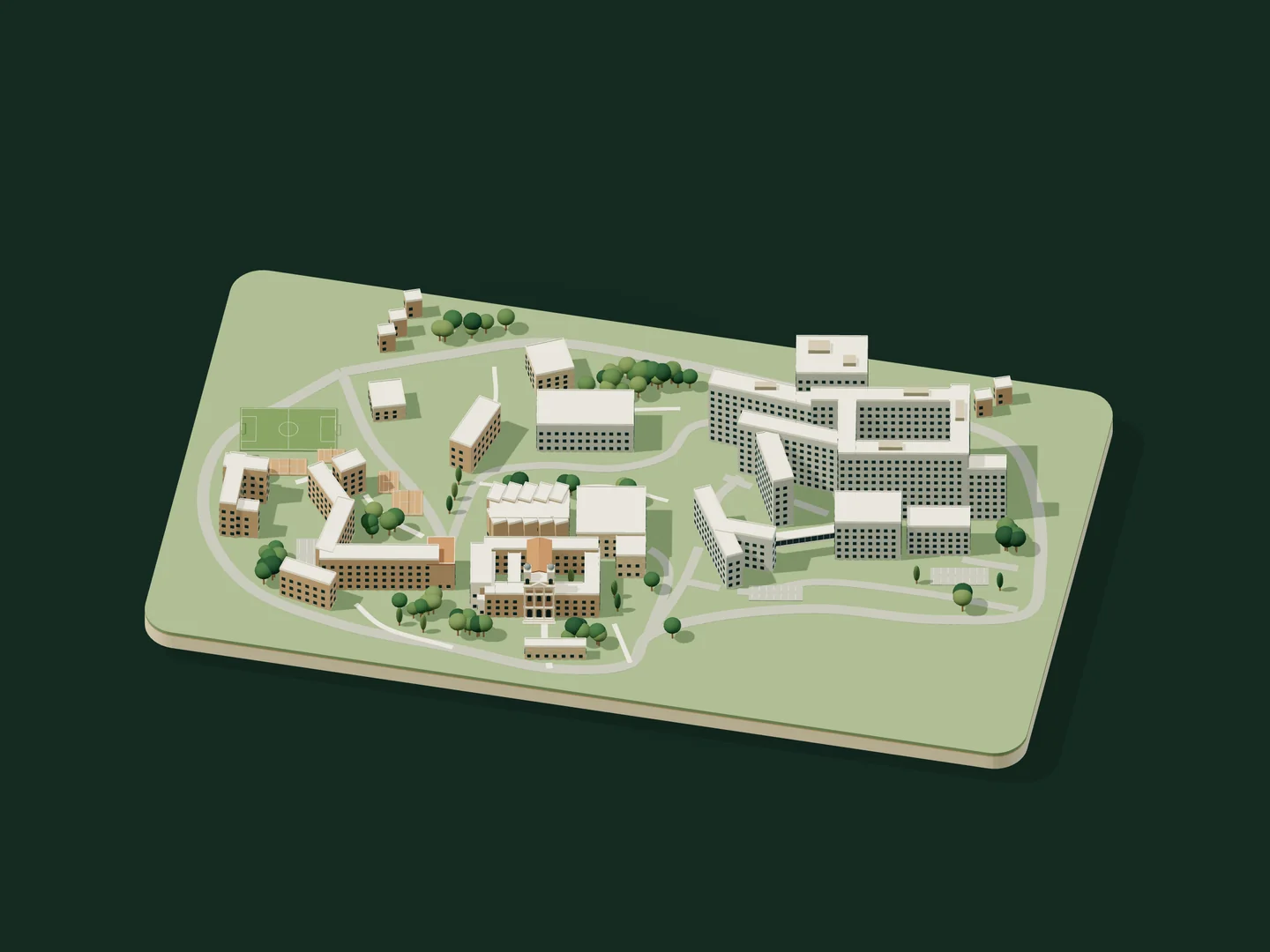
The English-taught Medicine and Surgery programme is taught at Cattolica's Rome campus, at Largo Francesco Vito 1 in the Monte Mario–Trionfale district, in the same area as the Fondazione Policlinico Universitario Agostino Gemelli IRCCS. Classes are held in the Biological Institutes, the Polo Giovanni XXIII, the Faculty of Economics and the Policlinico, and the campus has 75,000 m² of green space with its own sports grounds.
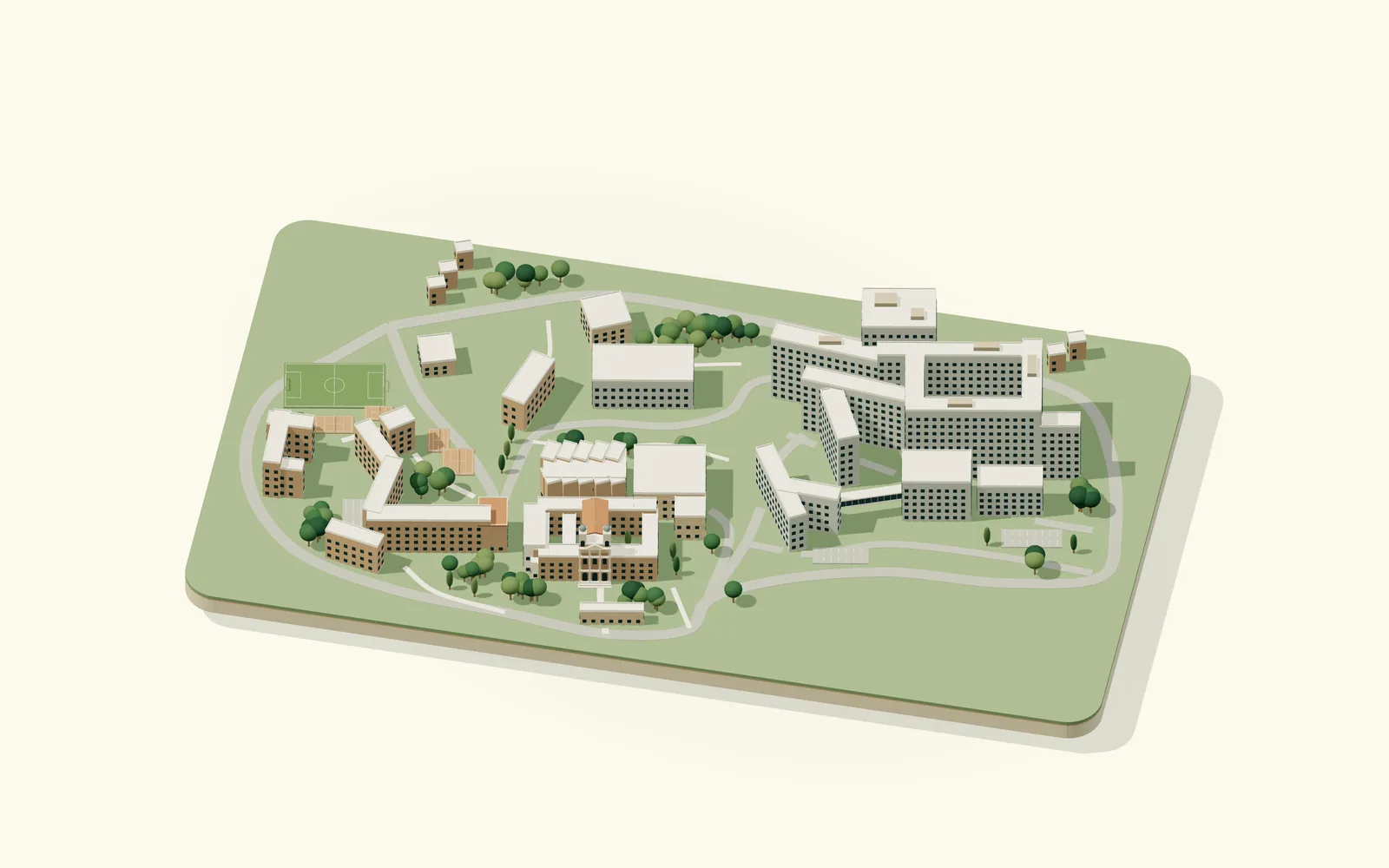
Rettorato e Uffici amministrativi
The Rector's office and the university's administrative offices.
Chiesa centrale
The campus's central church.
Centro Congressi Europa
The campus congress centre.
Facoltà di Economia
The Faculty of Economics, one of the buildings where classes are held.
Facoltà di Medicina e chirurgia · Istituti Biologici
The Faculty of Medicine and Surgery's Biological Institutes, where classes are held.
Polo Universitario Giovanni XXIII
A university teaching building where classes are held.
Auditorium
The campus auditorium.
Collegio Nuovo Joanneum
A residential college on the campus.
Impianti sportivi
Sports grounds: two tennis courts, an 11-a-side grass football pitch and a five-a-side pitch, within 75,000 m² of green space.
Edificio Vito
Orientation and recruitment, tutoring, and internships and placement.
Fondazione Policlinico Universitario A. Gemelli IRCCS
The teaching hospital, in the same area as the campus; classes are held here too.
Student life
Living in Rome as a medical student
Cattolica's Rome Medicine and Surgery programme trains at and is clinically integrated with the Fondazione Policlinico Universitario Agostino Gemelli IRCCS, one of the city's major teaching hospitals.
Rome itself offers the full range of big-city student life — a large multi-university population, extensive public transport, and neighbourhoods at very different price points, from Trastevere and Prati at the higher end to areas further from the centre that are noticeably more affordable.
Confirm current student-housing options directly with Cattolica's international office rather than assuming what's typical elsewhere in Rome applies to this specific campus.
FAQ
Cattolica admissions FAQ
This guide covers the entrance exam for the English-taught Medicine and Surgery programme in Rome. Università Cattolica's Italian-taught programme uses a separate, differently structured in-person test, so if you're applying to that track, its content isn't a match for this guide.
65 scored questions in one continuous 65-minute sitting, plus 7 unscored reserve questions in a further 7 minutes: Logical Reasoning 20, Biology 18, Chemistry 12, Ethics and Religious Culture 5, Mathematics 4, Physics 4 and General Culture 2. A correct answer scores +1, a wrong one −0.25 and a blank 0, and you need at least 20 of 65 to be admissible at all. For 2026/27 it was sat online from home under remote proctoring, on 25 March 2026.
For 2026/27 there were 40 EU-quota and 70 non-EU-quota places, each ranked separately, and the test fee was €210. Quotas are confirmed each year by the Italian Ministry, so check the new figures once the 2027/28 guidelines are out.
Yes. It's updated for Università Cattolica's 2027/28 call, published on 14 October 2026. The call keeps the same test (65 questions in 65 minutes, the same subject split and scoring), the same places (40 EU, 70 non-EU) and the same €210 fee; applications close on 17 February 2027 and the online exam is on 17 March 2027. Two things in the content changed, and the guide follows both: the physics syllabus was rewritten (fluid dynamics and Bernoulli, angular momentum, equipotential surfaces, capacitor energy, AC period and frequency, the magnetic field of a current and more), and the ethics reading list now names Magnifica Humanitas, Pope Leo XIV's encyclical, in place of Laudato si'.
Yes. The simulator includes Cattolica-format questions that align with the guide's topic coverage.
Within the EU, yes. It's a standard Italian medical degree (LM-41), automatically recognised for practice across the EU/EEA under EU law. One Italy-specific point worth knowing: the old separate state licensing exam (Esame di Stato) no longer exists for this degree. Since a 2020/2021 reform, the practical assessment built into the final year of the course itself confers the right to register with the local Ordine dei Medici and practice. For the UK, the Medical Act 1983 (sections 21B and 21C, as in force on 12 October 2026) spares holders of an Italian medical degree the knowledge test other international graduates take through PLAB/UKMLA, but the UK's list pairs the laurea with the Diploma di abilitazione all'esercizio della medicina e chirurgia, which Italy stopped issuing in March 2020, when the practical training moved inside the degree. The GMC's Italy page therefore offers graduates since then provisional registration on the laurea, for a UK Foundation Year 1 post, and asks for evidence of supervised practice, such as a 12-month internship, for full registration. US recognition follows the standard international-graduate route (ECFMG certification via USMLE) rather than an automatic Cattolica-specific pathway.
Ready to prepare for the Cattolica Medicine Test?
The Cattolica Complete Admissions System — study guide, exam simulator, video courses and application help, built from Università Cattolica del Sacro Cuore's own syllabus.